
Blog / New York Hyundai Service

Hyundai Palisade vs Honda Pilot: How They Compare for Riverhead Families

Hyundai Palisade vs Honda Pilot: How They Compare for Riverhead Families
THE SHORT ANSWER
For most Riverhead families, the Hyundai Palisade is the stronger three-row choice. It gives you more standard comfort and safety tech, a hybrid option the Pilot doesn't offer, and Hyundai's longer warranty. The Pilot's main extra is a trail-focused TrailSport trim, and the Palisade's XRT with HTRAC all-wheel drive covers the driving most local families actually do.

Here's the one tip I give families weighing a Hyundai Palisade against a Honda Pilot: bring your actual car seats, booster and stroller to the test drive and install them yourself. Ten minutes in the lot will tell you more about third-row access and cargo room than any brochure. At Riverhead Hyundai in Riverhead, we see plenty of local families cross-shopping these two, so here's how they stack up, point by point.

Price and Value

What you get for the money

The Palisade has built its name on putting more standard equipment into each trim than families expect. Line the two SUVs up by features rather than by trim name, and you'll often find the Palisade includes more at a similar step in the lineup. Add the hybrid choice, the longer warranty and the complimentary maintenance, and the value picture tilts clearly toward the Hyundai.

Our finance team has helped thousands of customers find lease and loan options. They can walk you through financing and lease choices on a new or certified pre-owned Palisade. Terms and approval depend on your credit and the lenders, so we'll lay out what's realistic for you plainly.

Side by side

FeatureHyundai PalisadeHonda Pilot
SeatingCaptain's chairs or bench, relaxation seats on top trimsUp to eight, removable second-row middle seat on some trims
Driver assistanceSmartSense standard, Safe Exit Assist, available Blind-Spot View MonitorHonda Sensing standard
All-wheel driveHTRAC availableAvailable
Rugged trimXRTTrailSport
HybridAvailableNot offered
WarrantyLonger basic and powertrain coverage, plus complimentary maintenanceShorter basic and powertrain coverage

Interior and Cargo Space

Hyundai Palisade

Most families start leaning our way once they sit inside the Palisade. You can choose second-row captain's chairs or a bench, and the materials feel a step above what you'd expect at the price. Upper trims add second-row relaxation seats and a power-folding third row, so switching from carpool duty to a big grocery haul takes a button press instead of a wrestling match.

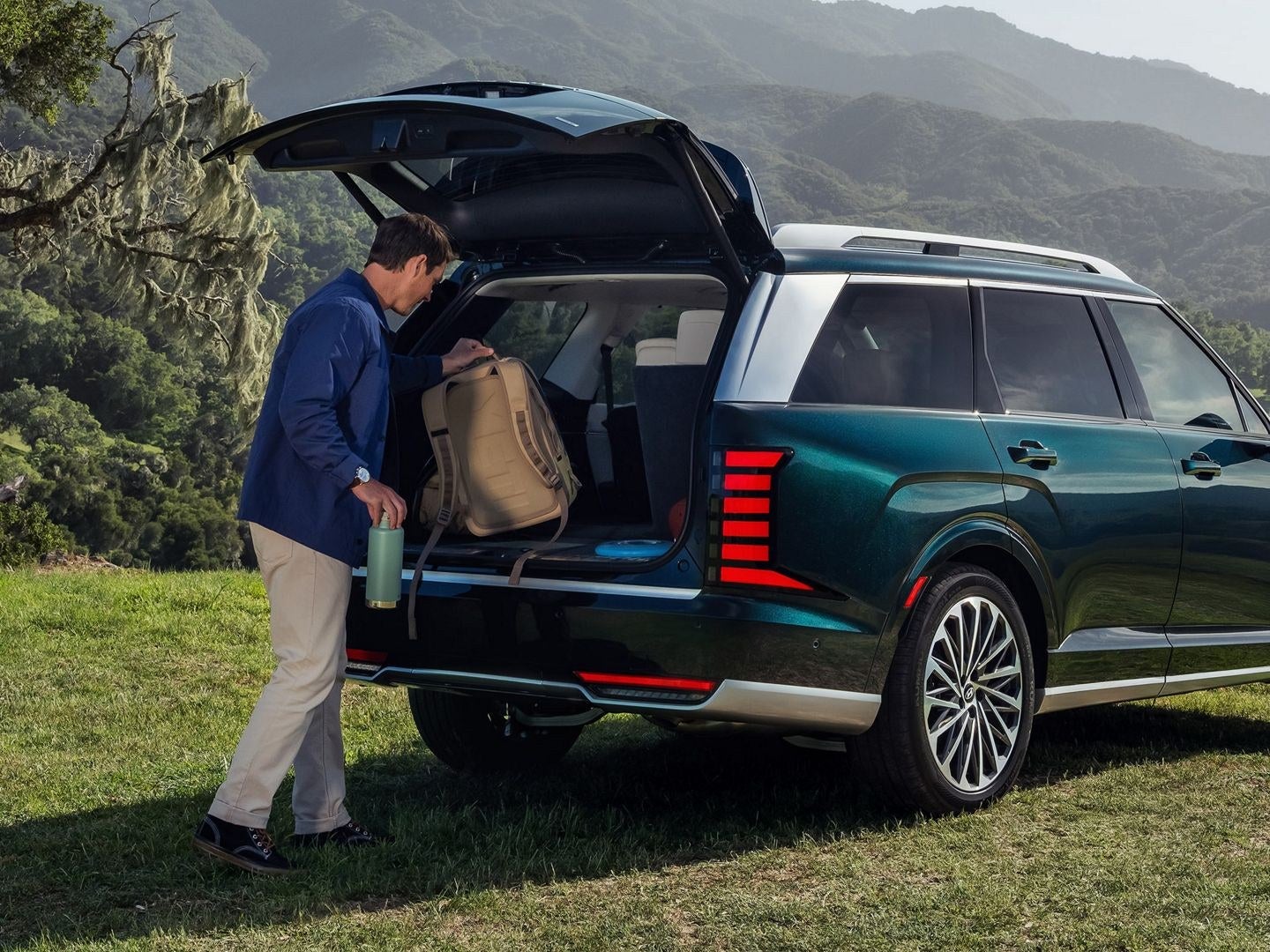
Getting into the third row is easy enough for kids to manage on their own. Adults fit back there fine for a ride out to the North Fork wineries, too. Behind that last row there's still useful room for a stroller or a week of groceries, and it opens up fast when you fold the seats.

Honda Pilot

Honda's Pilot is also a genuine three-row SUV with seating for up to eight. Its clever trick is a removable second-row middle seat on some trims, which you store under the cargo floor to turn the bench into captain's chairs. That's a smart idea, though you're lifting and stowing a seat by hand. With the Palisade you simply pick the layout you want from day one and enjoy the richer cabin every time you climb in.

Both will carry your crew comfortably. What usually settles it is how the space feels once your own gear is inside, which is exactly why that car-seat test matters.

Safety and Tech Features

Hyundai Palisade

Hyundai builds its SmartSense driver-assistance suite into the Palisade as standard. That covers forward collision-avoidance assist, blind-spot collision-avoidance assist and lane-keeping help. Parents especially like Safe Exit Assist, which can hold a rear door locked when a car or cyclist is coming up alongside. That's a real help when you're parallel parked downtown with kids bouncing out the back.

On the tech side, available Highway Driving Assist helps with steering and spacing on long stretches of the Long Island Expressway. Signal a lane change and the available Blind-Spot View Monitor puts a live camera image of that side right in your gauge cluster. A rear occupant alert reminds you to check the back seat before you lock up and walk away, and Digital Key lets your phone stand in for the fob on many trims.

Honda Pilot

Honda Sensing comes standard on the Pilot, with collision mitigation braking, adaptive cruise and lane-keeping assistance. It's a solid foundation. Where the Palisade pulls ahead is in the extras families notice day to day: the camera view of your blind spot and the Safe Exit Assist door lock.

Drive both through Route 58 traffic on a busy afternoon. The way the Palisade's systems handle stop-and-go and lane changes tends to make the case on its own.

Towing and Capability

Hyundai Palisade

Plenty of Riverhead families tow something: a small boat down to the Peconic, a pair of jet skis, a pop-up camper for a weekend upstate. The Palisade handles that kind of light-to-moderate towing comfortably. Available HTRAC all-wheel drive helps on wet boat ramps, sandy beach lots and snowy winter mornings.

If you like a tougher look, the XRT trims add rugged styling without giving up the smooth, quiet ride you'll appreciate on Sound Avenue. Tow ratings can shift with trim and drivetrain, so check the window sticker on the exact Palisade you're considering before you hitch up.

Honda Pilot

The Pilot tows the same kinds of trailers and also offers all-wheel drive. Its TrailSport trim is the real difference, with all-terrain tires and underbody protection aimed at rough trails. That's a fair point in its favor. Still, most of our customers spend their miles on pavement, gravel driveways and the occasional beach parking lot, and there the Palisade's XRT and HTRAC cover the need while keeping a more refined ride the rest of the week.

If you tow regularly, bring your trailer details when you come in. We'll go over the hitch setup and the right Palisade trim for your boat or camper.

Hybrid Option

Hyundai Palisade

Here's the clearest split between these two. The newest Palisade is available with a hybrid powertrain, which gives you a three-row SUV that leans on electric assist around town. You'll notice it most in the driving Riverhead families do all the time: the crawl along Route 58 on a summer Saturday, school drop-offs, short hops to practice and back.

Electric help at low speeds also makes the cabin calmer, which is nice when someone finally falls asleep in the third row. A conventional gas engine is still offered if that suits you better, so the hybrid is a choice, not a requirement.

Honda Pilot

Honda offers the Pilot with a V6 gas engine only. It's a smooth engine, but there's no hybrid version to pick, so families hoping to cut fill-ups and quiet down the daily routine don't have that path with the Pilot.

Think about how much of your summer goes to traffic heading east toward the Hamptons and Montauk. If the answer is a lot, the Palisade Hybrid will change how often you stop for gas and how relaxed you feel when you finally get there. We're happy to set one aside so you can try it on your own roads.

Warranty Coverage

Hyundai Palisade

Warranty is one of the biggest reasons families end up in a Palisade. Hyundai's coverage runs longer than Honda's on the basic new-vehicle warranty and especially on the powertrain. The longest part of that powertrain coverage applies to the original owner, so it's worth knowing if you're buying new and plan to keep the SUV while the kids grow up.

Hyundai also includes complimentary scheduled maintenance for the early years, covering routine items like oil changes and tire rotations. When you do come in, our technicians use certified genuine Hyundai parts. Online service scheduling and parts ordering let you handle it from your kitchen table, and booking service online takes a couple of minutes.

Honda Pilot

The Pilot carries Honda's standard new-vehicle and powertrain warranties, which are shorter on both counts. It also doesn't include a comparable complimentary maintenance program as standard, so routine service costs land on you sooner.

Longer coverage and included maintenance mean fewer surprise bills as the miles pile up on school runs and summer trips. That's a big part of why Palisade ownership stays predictable year after year, and why families who come in for service with us tend to come back when it's time for their next car.

Where
1800 Old Country Rd
Riverhead, NY
KEY TAKEAWAYS
  • The Palisade gives you more standard comfort and driver-assistance tech, plus a hybrid choice the Pilot can't match.
  • Hyundai's longer warranty and complimentary scheduled maintenance keep Palisade ownership costs predictable.
  • Test the third row with your own car seats. The Palisade's cabin tends to win families over in person.
FAQ

Common questions

Is the Hyundai Palisade roomier inside than the Honda Pilot?

Both are full three-row SUVs, but the Palisade gives you a choice of captain's chairs or a bench from the start, plus a power-folding third row and relaxation seats on upper trims. Most families find its cabin feels more comfortable and upscale. Try your own car seats in a Palisade to see how it fits your crew.

Does the Honda Pilot come as a hybrid?

No. The Pilot is offered with a V6 gas engine only. The newest Hyundai Palisade is available as a hybrid, which helps most in stop-and-go driving like summer traffic on Route 58 and school drop-offs.

Which has the better warranty, the Palisade or the Pilot?

The Palisade. Hyundai's basic and powertrain coverage both run longer than Honda's, and Hyundai includes complimentary scheduled maintenance for the early years. That makes Palisade ownership costs more predictable.
Want to see it in person?
Come by for a test drive, or browse what is on the lot right now.
Or call (631) 369-0600 · 1800 Old Country Rd, Riverhead
Posted in:

Related Posts

Ioniq 5 N Performance Explained: Horsepower, Torque and Drive Modes

Ioniq 5 N Performance Explained: Horsepower, Torque and Drive Modes

THE SHORT ANSWER The Ioniq 5 N uses two electric motors and full-time all-wheel drive, and its highest power rating applies only while N Grin Boost is engaged. The rest of the time you drive on a standard output that is still very strong. Its N drive modes then let you shape how that power arrives: the front-to-rear torque split, regenerative braking, sound and simulated gear shifts, so the same car can feel calm on Main Road or sharp at a track day. The most common mistake people make with the Ioniq 5 N is treating its top horsepower rating as the whole story, as if that peak is what you get every time you press the pedal. It isn't, and the reason explains a lot about how this car works. At Riverhead Hyundai in Riverhead, NY, enthusiasts ask us about it in plain terms all the time. So here's a straightforward walk through the motors, the modes and what the car is like to live with. IN THIS POST Motors and Horsepower N Grin Boost and Drift Modes Torque Distribution and AWD Braking and Handling Upgrades Everyday Drivability Driving It on the East End Owning and Servicing a Performance EV What to Do Next Key takeaways Motors and Horsepower The Ioniq 5 N runs on two electric motors, one for the front wheels and one for the rear, so it's all-wheel drive all the time. Hyundai rates its power two ways. One is a standard output you can use whenever you like. The other is a higher peak that unlocks only when you ask for it. That split is where most of the confusion starts. When you hear the bigger number, it describes the car with N Grin Boost engaged, which we'll get to next. In ordinary driving, including a hard run up the ramp onto the Long Island Expressway, you're working with the standard output. That's still far more than most people will ever use on a public road. Horsepower versus torque Horsepower describes how much work the motors can do as speed builds. Torque is the twisting force you feel the moment you press the pedal. Electric motors deliver it almost instantly, with no waiting for an engine to rev up. Instant torque is what first-time drivers talk about afterward, more than any top-end rating. If you'd like to see one in person while you read, you can browse our new Hyundai inventory and see what's on the lot. N Grin Boost and Drift Modes N Grin Boost is a dedicated button on the steering wheel. Press it and the car releases a short burst of extra power for a limited window, then drops back to its standard output. Think of it as an overtake function rather than a mode you leave on. It makes the most sense on a long track straight, during a launch at an organized event, or for a confident pass on an open stretch. Battery temperature and charge level affect how much you get. Hyundai includes battery preconditioning settings that warm the pack before hard driving, and the car performs best when the battery is warm and well charged. Drifting, in plain terms N Drift Optimizer is built for closed courses. It adjusts motor response and how the rear wheels share power, so the back of the car slides more predictably while you hold it at an angle. It doesn't make you a drift driver. It makes learning less abrupt. N Pedal works alongside it. With N Pedal on, lifting off the accelerator brings in strong regenerative braking, which shifts weight onto the front tires and helps the car turn into a corner. On a track that's a useful tool. On a wet back road it can catch you off guard, so leave it for the right setting. Torque Distribution and AWD All-wheel drive in the Ioniq 5 N isn't fixed. N Torque Distribution lets you choose how drive is shared between the front and rear motors, in steps from front-biased to rear-biased. A front-heavy split feels planted and stable. A rear-heavy one makes the car more eager to rotate through a turn, closer to a traditional rear-drive sports car. At the back sits an electronic limited-slip differential. When you accelerate out of a corner, weight moves to the outside of the car and the inside rear tire wants to spin uselessly. The differential manages power between the two rear wheels so more of it goes to the tire that has grip. Picking a setting for the road you're on On a rainy morning on Route 25, or the first snowy commute of the winter, a balanced or front-leaning split is the sensible choice. You can also leave the car in a standard drive mode and let it manage traction on its own. Save rear-biased settings for dry pavement, ideally on a closed course. Two customizable N buttons on the wheel can store your preferred combinations. Many owners set one up as a calm, grippy setup and the other as their track setup, then switch with a single press. Braking and Handling Upgrades Electric cars carry a heavy battery, and stopping a quick, heavy car over and over takes more than standard hardware. Hyundai fits the Ioniq 5 N with larger brakes than the regular Ioniq 5. It also leans on the electric motors themselves to slow the car. That second part is called N Brake Regen. During most braking, the motors handle much of the work, recovering energy and keeping the friction brakes cooler. In the hardest stops, the mechanical brakes take over fully. You get consistent pedal feel lap after lap, without the fade that comes from overheated pads. What changes underneath Compared with the standard Ioniq 5, the N gets a reinforced body structure, stiffer mounting points, retuned suspension and quicker-feeling steering. The battery sits low in the floor, which keeps the center of gravity down and helps the car stay flat in corners. Performance tires do the rest, though they trade some quietness and longevity for grip. If you plan on track days, expect pads and brake fluid to wear faster than on any commuter car. Have them inspected before and after each event, and when it's time to replace them, choose genuine Hyundai brake parts built for this car rather than generic substitutes. Everyday Drivability For all its track tools, the Ioniq 5 N drives like a firm, quick Ioniq 5 when you want it to. In its calmer modes, power comes on smoothly, the adaptive suspension softens, and regenerative braking behaves the way most EV owners expect. Running errands in Mattituck or commuting west on the expressway doesn't require any special technique. Two features surprise people. N e-Shift simulates gear changes, complete with a small jolt between shifts. N Active Sound+ plays engineered driving sounds through the speakers. Both add personality on a fun drive, and both can be switched off when you'd rather have quiet. The honest trade-offs The ride is stiffer than a standard Ioniq 5, and the performance tires make more road noise. Driving hard uses energy quickly, so your range will vary much more with your right foot than it would in a regular EV. Charging works like the rest of the Ioniq 5 lineup, including fast DC charging on the road. You still get a practical hatchback with a usable back seat and cargo area. For a lot of buyers that's the real appeal: one car that handles the school run during the week and a performance event on a Saturday. Driving It on the East End Out here, the roads shape how you'll use this car more than any track. Sound Avenue and Route 48 have flowing stretches. Route 25 brings farm stands, tractors and slow summer traffic toward Greenport. Heading to the South Fork on Route 24 or Route 27, weekend congestion means you'll spend plenty of time at legal, unremarkable speeds. The good news is that the Ioniq 5 N is enjoyable well below its limits. Steering feel, the quick response of the motors and the way the chassis settles into a curve all come through at normal speeds. You don't need to break any laws to feel why it's different. Seasonal things to watch Late winter potholes are hard on low-profile performance tires and wheels. After a bad hit, have the alignment and tires checked. Deer on back roads at dusk are another reason to keep N Pedal off and your braking predictable after dark. If you want to explore the car's full ability, organized track days off the Island are the place for it. Many come with instructors who can walk you through drift and launch functions safely. A day with good instruction teaches more about the car than months of street driving. Where 1800 Old Country Rd Riverhead, NY Call (631) 369-0600 KEY TAKEAWAYS The top horsepower rating applies only while N Grin Boost is active. Day to day you're on the standard output, which is still plenty. N modes change how power is delivered, how drive is split between the axles and how the car brakes, so match them to the road and the weather. Performance driving wears tires and brakes faster, so plan maintenance and test-drive the modes before you decide. FAQ Common questions Is the Ioniq 5 N a good choice for Long Island winters? It can be, with the right setup. Its all-wheel drive and adjustable torque split help in rain and light snow, but the factory performance tires aren't designed for cold or icy roads. Many owners switch to a set of winter tires on separate wheels for the colder months and keep the car in a calmer drive mode until spring. Can I turn off the simulated engine sound and gear shifts? Yes. N Active Sound+ and N e-Shift are both optional, and you can switch them off in the settings. With them off, the car is quiet and smooth like a regular EV. Turn them back on when you want a more traditional sports-car feel. Is the Ioniq 5 N too much car for someone new to performance driving? Not if you build up gradually. In its standard modes it's predictable and easy to drive, and the advanced functions like drift and launch settings stay off unless you choose them. A test drive, time spent learning the settings, and an instructed track day are a sensible path for a newer enthusiast. Want to see it in person? Come by for a test drive, or browse what is on the lot right now. Schedule a test drive Browse new inventory Or call (631) 369-0600 · 1800 Old Country Rd, Riverhead Or keep browsing Current offers Financing Value your trade Book service Contact us Used cars

Hyundai Venue Pros and Cons for Riverhead Commuters

Hyundai Venue Pros and Cons for Riverhead Commuters

THE SHORT ANSWER The Hyundai Venue is a strong choice for Riverhead commuters who drive mostly local roads, park downtown and want a small SUV that's simple to own. It gives up highway passing power and cargo room compared with larger SUVs. Frequent LIE drivers and families who haul a lot may be happier one size up. If your day is mostly Route 58 errands, Main Street parking and a run up Route 25, the Hyundai Venue fits well. It asks for patience on long LIE stretches and on weekends when you're hauling a lot of gear. Think about the last time you circled the lot behind the riverfront, waiting for someone to back out of a tight space. That moment, repeated over a year of commuting, is how we at Riverhead Hyundai think about the Venue. Hyundai Venue Best for solo commuters and couples who drive mostly local roads It's easy to park, simple to own and right-sized for Riverhead errands A larger Hyundai SUV like the Kona or Tucson Best for families and frequent LIE drivers More power and room make long highway days and big loads easier A certified pre-owned SUV Best for budget-focused shoppers who want more size for the money A certified pre-owned vehicle can put a bigger SUV within reach *Who the Venue fits best Someone whose miles stay mostly east of the Riverhead traffic circle, who parks in tight spots often and rarely fills the back seat. Retirees, first-time buyers and second-car households tend to land here. Our take For most Riverhead commuters, the Venue is the right call. If your week looks like Route 58, downtown parking, a few trips out to the North Fork and only the occasional run west on the LIE, its small size and easy ownership outweigh what it gives up. Buy the Venue if you mostly drive alone or with one passenger and value simplicity. Step up a size if you're on the expressway to the city several days a week, carry kids and gear regularly, or want all-wheel drive for winter. ### What to do next - Drive it on your real commute, including an on-ramp - Bring the bulkiest thing you carry often and test the cargo area - Sit in the back seat yourself before deciding it works for passengers When you're ready, book a test drive and ask to try a Venue and a larger SUV back to back. Riverhead Hyundai also offers online prequalification, which can give you a sense of your options before you visit. Approval always depends on a lender's review of your application. Easy Parking and Maneuvering This is where the Venue earns its keep. Hyundai's smallest SUV has a short footprint, so the spots other drivers pass up near the Peconic riverfront or along East Main Street suddenly work for you. Tight turns and a compact body make U-turns, crowded outlet lots and narrow farm-stand pull-offs on Sound Avenue less of a production. You also sit a bit higher than in a small sedan, which helps you see over parked cars when you're backing out at a Route 58 shopping center in July. What's good Fits spaces that larger SUVs skip Easy to place in crowded lots and garages Parallel parking on downtown streets gets less stressful What to weigh Small can feel small. On a windy day crossing open farmland toward Calverton, a lighter vehicle gets nudged around more than a heavier one, though it's rarely more than a mild correction at the wheel. Coming out of a midsize SUV, give yourself a week to learn the shorter hood and where the front bumper really ends. Most owners find the adjustment fades fast, and parking becomes the part of the commute they stop dreading. Fuel Efficiency Around Town A small, light SUV with a modest four-cylinder engine doesn't have much weight to haul around, and that shows up at the pump. Stop-and-go hops between Riverhead, Aquebogue and Jamesport are exactly where a compact vehicle tends to shine against something heavier. Your clearest picture comes from the EPA ratings on the window sticker, then your own habits. Short trips with lots of idling in summer traffic on Route 58 will pull real-world mileage down no matter what you drive. What's good Less weight to get moving away from every light Smaller tires generally cost less to replace than bigger SUV tires Routine maintenance tends to be straightforward What to weigh Hyundai doesn't offer the Venue as a hybrid. If the lowest possible fuel use is your goal, compare it with a hybrid model's window sticker side by side. Running costs include upkeep, too. As a full-service Hyundai dealership in Riverhead, we handle oil changes, tire rotations and recall work in one place, and you can book service online around your work schedule. Our shop uses certified genuine Hyundai parts, so repairs match what the car was built with. Cargo and Passenger Space Picture a Saturday that starts at a garden center on Route 25 and ends with a cooler and two beach chairs headed to Iron Pier. The Venue handles that kind of day well. Fold the rear seat and you've got useful room for bags, flats of flowers or a weekend duffel. Front-seat comfort is good for a vehicle this size, and the upright shape gives you more headroom than many small cars. Two adults up front with occasional passengers in back is the sweet spot. Where it gets tight Rear legroom is limited for tall adults on longer rides Rear-facing child seats can crowd the front passenger A stroller plus a grocery run can fill the cargo area quickly Bulky items like a full-size bike usually need a rack Downsizing from a three-row SUV? Bring the gear you actually carry when you come look. Five minutes with your stroller or golf bag in the back tells you more than any brochure. Riverhead Hyundai offers trade-in assistance, and you can value your trade online before you visit. Highway Passing Power Here's the honest trade-off. Merging onto the LIE at the Riverhead end, or passing a slow truck on Sunrise Highway toward the Hamptons, the Venue gets there, but it takes planning rather than a quick press of the pedal. Its small engine is tuned for efficiency and city driving, not quick bursts at highway speed. Plan your passes with more room than you would in a larger SUV, especially with passengers and luggage aboard. What's good Steady and predictable once it's at cruising speed Driver-assist features help on long, repetitive stretches Light, easy steering that doesn't tire you out What to weigh Small vehicles let in more road and wind noise, and you'll notice it on concrete stretches of the expressway. If you drive to Queens or Manhattan several times a week, the extra effort on on-ramps adds up. A full load will make the engine work harder and sound busier. Judge this on the road, not on paper. Take the Venue onto the LIE during your drive, not just around the block. If it feels fine to you at highway speed, it'll likely feel fine every day. Where 1800 Old Country Rd Riverhead, NY Call (631) 369-0600 KEY TAKEAWAYS The Venue's small size makes parking and local errands around Riverhead easy. It trades highway passing power, rear-seat room and cargo space for simplicity. Frequent LIE commuters and families should drive a larger SUV back to back before deciding. FAQ Common questions Does the Hyundai Venue come with all-wheel drive? No, the Venue is front-wheel drive only. For Long Island winters, a good set of winter tires makes a real difference in snow and slush. If all-wheel drive is a must for you, the Kona and Tucson both offer it. Is the Venue comfortable for a regular drive to New York City? It can make the trip, and it's steady at cruising speed. Expect more road noise than in a larger SUV, and plan merges and passes with extra room. If you're making that drive several times a week, compare it with a bigger SUV on the expressway before you decide. Is the Venue a good first car for a new driver? It's a sensible one. The small size makes parking and tight lots less intimidating, the higher seat helps visibility, and its driver-assist features add a layer of help on busy roads like Route 58. Its modest power also tends to encourage calmer driving habits. Want to see it in person? Come by for a test drive, or browse what is on the lot right now. Schedule a test drive Browse new inventory Or call (631) 369-0600 · 1800 Old Country Rd, Riverhead Or keep browsing Current offers Financing Value your trade Book service Contact us Used cars

How Hyundai Recall Service Works at Riverhead Hyundai

How Hyundai Recall Service Works at Riverhead Hyundai

THE SHORT ANSWER Hyundai safety recall repairs are done at no cost to you once the replacement parts are available, and the recall follows the car no matter who owns it now or where it was bought. Riverhead Hyundai can run your VIN, tell you what's open and schedule the fix directly. You're sorting the mail after a run down Route 58, and there's an envelope with Hyundai's name on it and the words "Important Safety Recall" in bold. It's easy to toss it on the counter and forget about it, or to worry it means a big bill. Here's the plain-English version of how recall service works at Riverhead Hyundai in Riverhead, from that first letter to driving home with the fix done. IN THIS POST What a Recall Actually Is How You're Notified Checking Your VIN for Open Recalls Scheduling the Repair What Happens During the Visit When Parts Aren't Ready Yet Why Recalls Don't Affect Resale Value What to Do Next Key takeaways A recall happens when Hyundai or the National Highway Traffic Safety Administration (NHTSA) determines that a part or system on a group of vehicles carries a safety risk or doesn't meet a federal safety standard. Hyundai then has to notify owners and fix the problem. It's not a knock on how you drive or care for your car. It covers a batch of vehicles built with the same part or software. You'll also hear the term service campaign, sometimes called a product improvement campaign. These cover issues that aren't safety defects, like a software update that makes a system work better. They run through the same service lane and are often free too, but the terms can vary, so ask when you book. The part that matters most Safety recall repairs don't cost you anything. Hyundai covers the remedy, parts and labor, at no charge to you. It doesn't matter if you bought the car new, used, from us or from a neighbor down Sound Avenue. The recall follows the car, not the person who owns it. How You're Notified Most owners hear about a recall the old-fashioned way: a letter by first-class mail. Hyundai pulls owner names and addresses from state registration records, so the letter goes to whoever is registered with the New York DMV for that car. It explains the problem, the risk, and what you should do in the meantime. Sometimes you'll get two letters. The first one tells you a recall exists, even if parts aren't ready yet. A second one follows once the fix is available and you can schedule it. Other ways you might find out An email or app alert if your car is connected to a MyHyundai account A heads-up from our service advisors when your car is already in for an oil change or tire rotation News coverage for larger recalls, though that won't tell you if your specific car is affected Here's the catch: if you moved, bought the car used, or your registration address is out of date, the letter may never reach you. That's why checking your VIN yourself is worth a couple of minutes. Checking Your VIN for Open Recalls Your VIN, or vehicle identification number, is the 17-character code that identifies your exact car. Recalls are tied to it, so it's the fastest way to know where you stand. Where to find it On the dashboard at the base of the windshield, driver's side, readable from outside On the sticker inside the driver's door jamb On your registration and insurance card Where to look it up The free lookup tool at nhtsa.gov/recalls shows any open safety recalls that haven't been repaired on your car. Your MyHyundai account shows the same, along with Hyundai service campaigns. You can also just call our service department and read us the VIN. We'll tell you what's open and whether the parts are on hand. A result of "0 unrepaired recalls" means you're all set for now. New recalls get announced throughout the year, though, so it's smart to run the check a couple of times a year, and anytime you buy or sell a car. It takes less time than finding a parking spot on Main Street in the summer. Scheduling the Repair Once you know there's an open recall, the next move is to book a service appointment. You can do it online or by phone. Either way, tell us it's for a recall and give us your VIN so we can confirm the parts are here before you make the trip. That step matters more than it sounds. Some recall parts arrive in limited batches, and confirming parts first keeps you from showing up and having to come back. If they're on order, we'll note your car and reach out when they land. Making the trip worth it Riverhead Hyundai serves Riverhead and the North Fork/East End, so plenty of our customers are driving in from Orient, Southold or the Hamptons. If that's you, pair the recall with routine maintenance that's coming due anyway. One drive, two jobs done. Ask your advisor roughly how long the repair takes. Some recall fixes are a quick software update; others involve swapping a component and take longer. Knowing ahead lets you decide whether to wait in the lounge or plan a ride. What Happens During the Visit When you pull in, a service advisor checks you in and confirms the recall on your VIN. From there, a technician follows Hyundai's official repair procedure for that specific recall. These procedures are written by the manufacturer, so the fix is done the same way at any Hyundai dealer in the country. The work uses certified genuine Hyundai parts, which is what the recall remedy calls for. There's no aftermarket substitute and no shortcut. If the technician spots something else While your car is in the bay, the tech may notice something unrelated, like worn brake pads or a tire that's getting low on tread. You'll hear about it, and you'll get a quote. Anything beyond the recall is your call. Saying no to extra work never affects the free recall repair. Before you leave, you'll get a repair order showing the recall was completed. Keep it with your car's records. It's proof the work was done, and it comes in handy later when you sell or trade the car. When Parts Aren't Ready Yet Sometimes Hyundai announces a recall before it has enough parts to fix every affected car. In that case, the first letter you receive is often called an interim notice. It explains the problem and tells you how to handle the car until the remedy is available. Read those instructions closely and follow them. Some recalls simply ask you to watch for a warning light. Others are more serious, like advising you to park outside, away from buildings, or not to let anyone sit in a certain seat. Hyundai only gives that kind of guidance when the risk calls for it. What you can do in the meantime Call us and ask to be added to the list for when parts arrive Keep your contact info current with Hyundai and the DMV so the second letter reaches you If you already paid out of pocket to fix the same problem before the recall was announced, ask about reimbursement, since Hyundai has a process for reviewing those claims Waiting is frustrating, especially if you rely on the car for the daily drive to work. Staying in touch with the service department is the best way to get your car in as soon as possible. Where 1800 Old Country Rd Riverhead, NY Call (631) 369-0600 KEY TAKEAWAYS Safety recall repairs are free, parts and labor included, for any owner of the affected car. A quick VIN check shows any open recalls, even if you never got a letter. Book the repair once parts are in, keep the paperwork, and the recall won't hurt your car's value. FAQ Common questions Do I have to bring my car back to the dealer where I bought it? No. Any authorized Hyundai dealer can perform a recall repair, no matter where the car was originally sold. If you bought your Hyundai somewhere else and now live near Riverhead, we can take care of it. I bought my Hyundai used. Am I still covered? Yes. Safety recalls follow the vehicle, not the original owner, so the repair is free for you too. Since the recall letter may have gone to a previous owner, run your VIN to make sure nothing is open. Is there a deadline to get a recall fixed? Most safety recalls stay open on your car until the repair is done, but there's no good reason to wait. The sooner the fix is in, the sooner the risk is gone, and you won't have an open recall hanging over a future sale. Can I drive my car before the recall is fixed? It depends on the recall. Your letter spells out what Hyundai advises, from watching for a warning light to stronger precautions. Follow those instructions, and call our service department if anything about them is unclear. Let us take care of it Book online in a minute and pick a time that works for you. Book service Order parts Or call (631) 369-0600 · 1800 Old Country Rd, Riverhead Or keep browsing Current offers Financing New inventory Contact us Used cars Certified pre-owned