


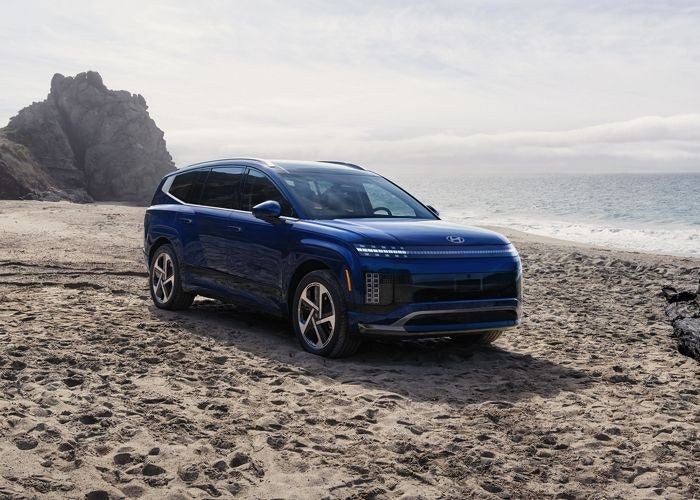
The most common mistake people make with the Ioniq 5 N is treating its top horsepower rating as the whole story, as if that peak is what you get every time you press the pedal. It isn't, and the reason explains a lot about how this car works. At Riverhead Hyundai in Riverhead, NY, enthusiasts ask us about it in plain terms all the time. So here's a straightforward walk through the motors, the modes and what the car is like to live with.
Motors and Horsepower
The Ioniq 5 N runs on two electric motors, one for the front wheels and one for the rear, so it's all-wheel drive all the time. Hyundai rates its power two ways. One is a standard output you can use whenever you like. The other is a higher peak that unlocks only when you ask for it.
That split is where most of the confusion starts. When you hear the bigger number, it describes the car with N Grin Boost engaged, which we'll get to next. In ordinary driving, including a hard run up the ramp onto the Long Island Expressway, you're working with the standard output. That's still far more than most people will ever use on a public road.
Horsepower versus torque
Horsepower describes how much work the motors can do as speed builds. Torque is the twisting force you feel the moment you press the pedal. Electric motors deliver it almost instantly, with no waiting for an engine to rev up. Instant torque is what first-time drivers talk about afterward, more than any top-end rating.
If you'd like to see one in person while you read, you can browse our new Hyundai inventory and see what's on the lot.
N Grin Boost is a dedicated button on the steering wheel. Press it and the car releases a short burst of extra power for a limited window, then drops back to its standard output. Think of it as an overtake function rather than a mode you leave on.
It makes the most sense on a long track straight, during a launch at an organized event, or for a confident pass on an open stretch. Battery temperature and charge level affect how much you get. Hyundai includes battery preconditioning settings that warm the pack before hard driving, and the car performs best when the battery is warm and well charged.
Drifting, in plain terms
N Drift Optimizer is built for closed courses. It adjusts motor response and how the rear wheels share power, so the back of the car slides more predictably while you hold it at an angle. It doesn't make you a drift driver. It makes learning less abrupt.
N Pedal works alongside it. With N Pedal on, lifting off the accelerator brings in strong regenerative braking, which shifts weight onto the front tires and helps the car turn into a corner. On a track that's a useful tool. On a wet back road it can catch you off guard, so leave it for the right setting.
All-wheel drive in the Ioniq 5 N isn't fixed. N Torque Distribution lets you choose how drive is shared between the front and rear motors, in steps from front-biased to rear-biased. A front-heavy split feels planted and stable. A rear-heavy one makes the car more eager to rotate through a turn, closer to a traditional rear-drive sports car.
At the back sits an electronic limited-slip differential. When you accelerate out of a corner, weight moves to the outside of the car and the inside rear tire wants to spin uselessly. The differential manages power between the two rear wheels so more of it goes to the tire that has grip.
Picking a setting for the road you're on
On a rainy morning on Route 25, or the first snowy commute of the winter, a balanced or front-leaning split is the sensible choice. You can also leave the car in a standard drive mode and let it manage traction on its own. Save rear-biased settings for dry pavement, ideally on a closed course.
Two customizable N buttons on the wheel can store your preferred combinations. Many owners set one up as a calm, grippy setup and the other as their track setup, then switch with a single press.
Electric cars carry a heavy battery, and stopping a quick, heavy car over and over takes more than standard hardware. Hyundai fits the Ioniq 5 N with larger brakes than the regular Ioniq 5. It also leans on the electric motors themselves to slow the car.
That second part is called N Brake Regen. During most braking, the motors handle much of the work, recovering energy and keeping the friction brakes cooler. In the hardest stops, the mechanical brakes take over fully. You get consistent pedal feel lap after lap, without the fade that comes from overheated pads.
What changes underneath
Compared with the standard Ioniq 5, the N gets a reinforced body structure, stiffer mounting points, retuned suspension and quicker-feeling steering. The battery sits low in the floor, which keeps the center of gravity down and helps the car stay flat in corners. Performance tires do the rest, though they trade some quietness and longevity for grip.
If you plan on track days, expect pads and brake fluid to wear faster than on any commuter car. Have them inspected before and after each event, and when it's time to replace them, choose genuine Hyundai brake parts built for this car rather than generic substitutes.
For all its track tools, the Ioniq 5 N drives like a firm, quick Ioniq 5 when you want it to. In its calmer modes, power comes on smoothly, the adaptive suspension softens, and regenerative braking behaves the way most EV owners expect. Running errands in Mattituck or commuting west on the expressway doesn't require any special technique.
Two features surprise people. N e-Shift simulates gear changes, complete with a small jolt between shifts. N Active Sound+ plays engineered driving sounds through the speakers. Both add personality on a fun drive, and both can be switched off when you'd rather have quiet.
The honest trade-offs
The ride is stiffer than a standard Ioniq 5, and the performance tires make more road noise. Driving hard uses energy quickly, so your range will vary much more with your right foot than it would in a regular EV. Charging works like the rest of the Ioniq 5 lineup, including fast DC charging on the road.
You still get a practical hatchback with a usable back seat and cargo area. For a lot of buyers that's the real appeal: one car that handles the school run during the week and a performance event on a Saturday.
Out here, the roads shape how you'll use this car more than any track. Sound Avenue and Route 48 have flowing stretches. Route 25 brings farm stands, tractors and slow summer traffic toward Greenport. Heading to the South Fork on Route 24 or Route 27, weekend congestion means you'll spend plenty of time at legal, unremarkable speeds.
The good news is that the Ioniq 5 N is enjoyable well below its limits. Steering feel, the quick response of the motors and the way the chassis settles into a curve all come through at normal speeds. You don't need to break any laws to feel why it's different.
Seasonal things to watch
Late winter potholes are hard on low-profile performance tires and wheels. After a bad hit, have the alignment and tires checked. Deer on back roads at dusk are another reason to keep N Pedal off and your braking predictable after dark.
If you want to explore the car's full ability, organized track days off the Island are the place for it. Many come with instructors who can walk you through drift and launch functions safely. A day with good instruction teaches more about the car than months of street driving.
Riverhead, NY
- The top horsepower rating applies only while N Grin Boost is active. Day to day you're on the standard output, which is still plenty.
- N modes change how power is delivered, how drive is split between the axles and how the car brakes, so match them to the road and the weather.
- Performance driving wears tires and brakes faster, so plan maintenance and test-drive the modes before you decide.
FAQ Common questionsIs the Ioniq 5 N a good choice for Long Island winters?It can be, with the right setup. Its all-wheel drive and adjustable torque split help in rain and light snow, but the factory performance tires aren't designed for cold or icy roads. Many owners switch to a set of winter tires on separate wheels for the colder months and keep the car in a calmer drive mode until spring. Can I turn off the simulated engine sound and gear shifts?Yes. N Active Sound+ and N e-Shift are both optional, and you can switch them off in the settings. With them off, the car is quiet and smooth like a regular EV. Turn them back on when you want a more traditional sports-car feel. Is the Ioniq 5 N too much car for someone new to performance driving?Not if you build up gradually. In its standard modes it's predictable and easy to drive, and the advanced functions like drift and launch settings stay off unless you choose them. A test drive, time spent learning the settings, and an instructed track day are a sensible path for a newer enthusiast. |
Want to see it in person? Come by for a test drive, or browse what is on the lot right now. Or call (631) 369-0600 · 1800 Old Country Rd, Riverhead |